
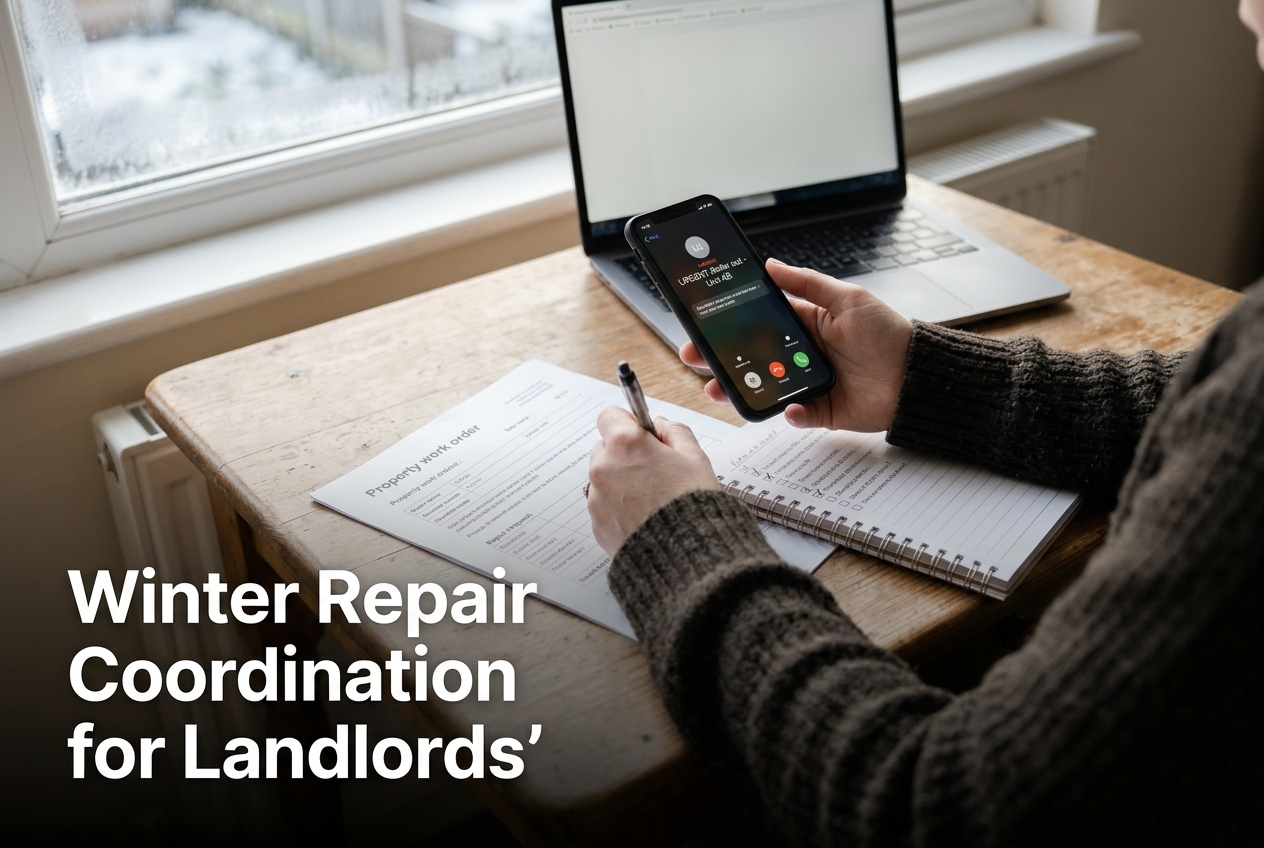
Winter contractor coordination is the process of receiving and triaging an urgent tenant report, arranging the right competent contractor, coordinating safe access and agreed spending authority, keeping landlord and tenant informed, and checking that the work is completed and recorded. That matters because “we handle maintenance” is too vague when pipes freeze, heating fails, or water starts coming through a ceiling. If you are a landlord, the real question is not whether someone will pick up the phone. It is what happens after that, especially outside office hours.
What winter contractor coordination actually is
At its core, winter contractor coordination is operational support, not just repair booking. It turns a problem report into a clear chain of action. Someone receives the issue, decides how serious it is, identifies whether it is a property fault or a utility problem, appoints the right contractor, handles access, and follows the job through to closure.
That sounds basic. In practice, this is where many landlords lose time. The hard part is not knowing that a boiler has failed or that a pipe has burst. The hard part is making sure the report reaches the right person, the right contractor is chosen, and nobody is left guessing who is responsible for the next step.
For managed landlords, the value is in the handoffs. Tenant to agent. Agent to contractor. Contractor back to agent. Agent back to landlord and tenant. If any of those links is weak, winter repairs drag.
How winter contractor coordination actually works
A useful service starts with a clear report. That means capturing the property, the tenant’s contact details, what failed, when it started, whether anyone is at risk, whether the problem is getting worse, and whether there is visible water or electrical danger. Without that, you are already behind.
Next comes triage. Not every winter issue is the same. A gas smell, suspected carbon monoxide exposure, dangerous electrical damage, substantial water escape, or loss of heating in severe cold needs a different first response from a routine defect. Good property management does not treat every call as a normal booking. It knows when the right move is emergency help, a utility call, or a contractor visit.
Then comes the tricky part most landlords underestimate, finding the right responsible party. The failure may be inside the property, on a private supply, or on a wider gas, water, or electricity network. In Chester, that means you cannot assume one provider covers every address. The service should confirm what is actually affected before it sends someone out.
After that, the contractor has to fit the work. Gas work needs a Gas Safe registered engineer, and the registration has to cover the specific job. Electrical work needs a qualified, competent person. The point is not just speed. It is the right trade, the right competence, and the right availability for that exact issue.
Finally, the job needs follow-through. A first visit may only make the situation safe or stop active damage. It may not be the permanent repair. Someone has to confirm what was done, what is still outstanding, who owns the next action, whether follow-up is needed, and whether the tenant can safely keep using the system.
That is the part worth paying attention to. The repair itself is only half the work. The coordination is the rest.
Why winter makes this more serious
Winter turns ordinary maintenance into a timing problem. Cold can freeze water in pipes. When water thaws, the pipe can split and leak. A boiler can also stop working if its external condensate pipe freezes. The same fault that might be annoying in mild weather becomes much more urgent when the property has no heat or hot water.
That is why winter contractor coordination matters to a landlord. It does not just reduce admin. It can reduce delay between the tenant reporting a problem and the right person taking responsibility for it. That is a practical gain, not a promise that damage will never happen or costs will always be lower.
The legal backdrop also matters. For private renting in England, the repair standard is not a neat universal deadline. The issue has to be dealt with within a reasonable period, and that depends on the facts and the seriousness of the problem. A heating failure in winter is not the same as the same issue in summer.
So if you are judging a property management service, do not ask only, “Do you handle maintenance?” Ask, “How do you handle it when the weather makes the problem urgent?”
What managed landlords gain from a real process
When a service has a defined winter process, you gain clarity. You know who receives the first report, who decides urgency, who authorizes work, and who follows up. That matters because maintenance problems often grow when nobody owns the next step.
You also gain a better tenant experience. Tenants do not want to repeat themselves to three different people while water is still coming in or the heating is still off. Clear tenant communication lowers friction, and it also reduces the chance of missed detail.
You gain better control over access. Under general government guidance, a landlord normally gives at least 24 hours’ notice to enter for inspection or repairs, though immediate access may be possible in emergencies. The tenant has the right to remain during repairs. A managed process should respect that instead of assuming every urgent issue erases communication and access rules.
You also get a cleaner paper trail. A proper record should show the time of the report, triage, instructions, access attempts, contractor appointment, approvals, findings, costs, completion evidence, and any insurer or utility contact. That record is not busywork. It is what lets you see what happened if the issue repeats or becomes a claim.
This is where good property management earns its keep. Not by making winter disappear, but by keeping the problem from turning into chaos.
The distinction landlords most often get wrong
The biggest mistake is confusing maintenance coordination with guaranteed 24/7 cover. They are not the same thing.
A service can say it supports maintenance and still not publish an out-of-hours reporting route, a response target, or an emergency attendance promise. Address’s public landlord information says it can help maintain tenant communication, make frequent site visits, ensure property maintenance, support suitable tenant selection, and keep landlords informed about market, tenant-expectation, and legislative developments. It does not publicly state a 24/7 emergency service, response time, contractor roster, or repair-spend threshold.
That is not a criticism. It is a signal to ask the right questions.
Another common mistake is assuming a first visit is the full fix. It often is not. A make-safe visit may stop the damage and buy time. Permanent repair, parts, follow-up visits, or insurer approval may still be needed. If your service does not track that second stage, winter jobs can stall even after someone has been out.
A third mistake is treating the repair law as if it were the same as a service promise. It is not. Legal repair duties set the floor. Your management agreement sets the service. Those are different things.
What to check before you rely on a management service
If you are comparing options, keep the questions tight. You do not need a long list. You need the parts that matter when the temperature drops.
Ask whether there is a real out-of-hours reporting route, and who answers it. Ask what counts as an emergency and how the service distinguishes immediate danger from an urgent but non-critical repair. Ask what response and update commitments are actually written into the contract, and whether they are targets or guarantees.
Ask which local contractors are available in winter and how their qualifications and insurance are checked. For gas work, ask how Gas Safe registration is verified for the specific task. For electrical work, ask how competence is checked. Ask what the agent can authorize without coming back to you, what the spending cap is, and whether there are any call-out costs or contractor fees you need to know about.
Ask what happens if the contractor cannot attend, or if you cannot be reached. Ask who arranges tenant access and who reports back to both sides. Ask whether the service distinguishes a make-safe visit from a completed repair, and how follow-up is handled.
And ask about records. What will you receive, and who contacts the insurer or utility if that is needed? If a service cannot answer those questions cleanly, winter will expose it fast.
Legal duties still sit with the landlord
This is the part people sometimes hope they can outsource away. You cannot.
In England, landlords are normally responsible for repairs to the structure, sanitary fittings, heating and hot-water systems, among other listed items. They must keep the property in good condition and meet gas and electrical safety standards. If you use an agent, that may reduce your day-to-day workload, but it does not remove the underlying duty.
Gas safety is a good example. Landlords must use a Gas Safe registered engineer for maintenance and safety checks on gas equipment they provide. The annual gas safety check has its own timing and record-keeping rules. It is not the same thing as a service visit, and you should not assume one replaces the other.
Electrical safety has its own requirements too. Rented electrical installations must be inspected and tested by a qualified person at least every five years, and required remedial work must be completed within 28 days, or sooner if the report says so. That is compliance, not a winter emergency SLA.
Damp and mould can also come into winter conversations. Guidance says to fix the underlying cause, respond promptly, use competent tradespeople, and check whether the problem has returned. That is useful in cold weather, but it should not be treated as proof that every mould issue is a structural defect.
So yes, a strong service helps. No, it does not replace the landlord’s legal responsibility.
A simple way to judge whether the support is real
If you want a quick test, use this: does the service have a process, or does it just have a promise?
A process has details. It says how urgent reports are received, who decides severity, who is allowed to spend, how access is arranged, how contractors are chosen, and how follow-up is recorded.
A promise stays vague. It says maintenance is handled, but leaves the rest to guesswork.
That difference matters more in winter than at any other time. A vague setup can still look fine in mild weather. Then the first frozen pipe, dead boiler, or burst line arrives and the gaps show up at once.
That is why managed landlords should care about winter contractor coordination even if they do not plan to micromanage repairs themselves. You are not buying a repair manual. You are buying the chance that the right people get involved fast, with fewer missed steps.
If you are speaking with Address, ask how its maintenance process works in practice, what the emergency reporting route is, how contractor checks are done, what approval limits apply, and what happens after hours. Those are the questions that tell you whether the service is just broad support, or real coordination when winter makes timing matter.
FAQ
Does a private landlord have 24 hours to fix every winter emergency?
No universal 24-hour private-rental repair deadline is established here. The standard is generally a reasonable period based on the facts and how serious the issue is. Winter can make the same fault more urgent, but it does not create a single fixed rule for every case.
Does Address publicly promise a 24/7 winter contractor service?
No. Its public landlord information does not state 24/7 cover, an emergency number, contractor attendance targets, or call-out terms. If that matters to you, ask for the actual service terms in writing.
What should a managed landlord expect when the heating fails in winter?
At minimum, a clear way to report the problem, sensible triage, a competent contractor for the relevant system, access coordination, updates, approval of costs where needed, and follow-up until the outcome is known. The exact response time depends on the contract and the situation.
What should a landlord check before appointing an emergency contractor?
Check that the contractor is competent and properly qualified for the work, that any required registration covers the task, and that relevant insurance is in place. For gas work, verify the engineer through Gas Safe and check the specific work category. Also agree the cost authority, access, scope, record, and follow-up steps with the managing service.